Weibo Corporation's management explains the business in its own materials. The slides below do the most of that work, pulled from the documents preserved in Sources. Each source link opens the complete presentation at that slide in a new tab.
Weibo publishes no investor deck; this annual ESG report is the only slide-format document management produces, and its opening and platform sections are the clearest self-description of the user base, the content verticals, the ad machine and the AI products. · Open the full document →
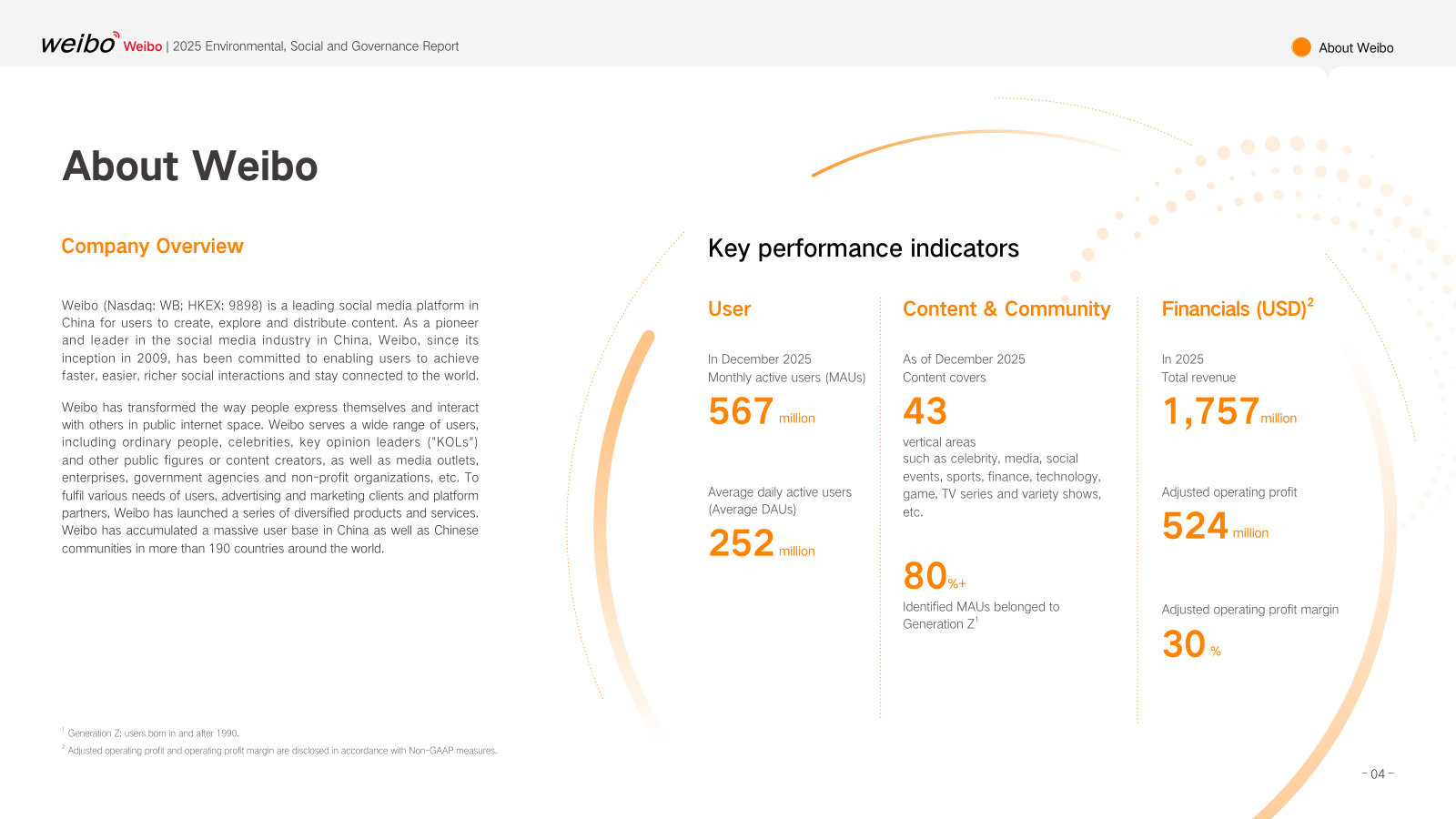
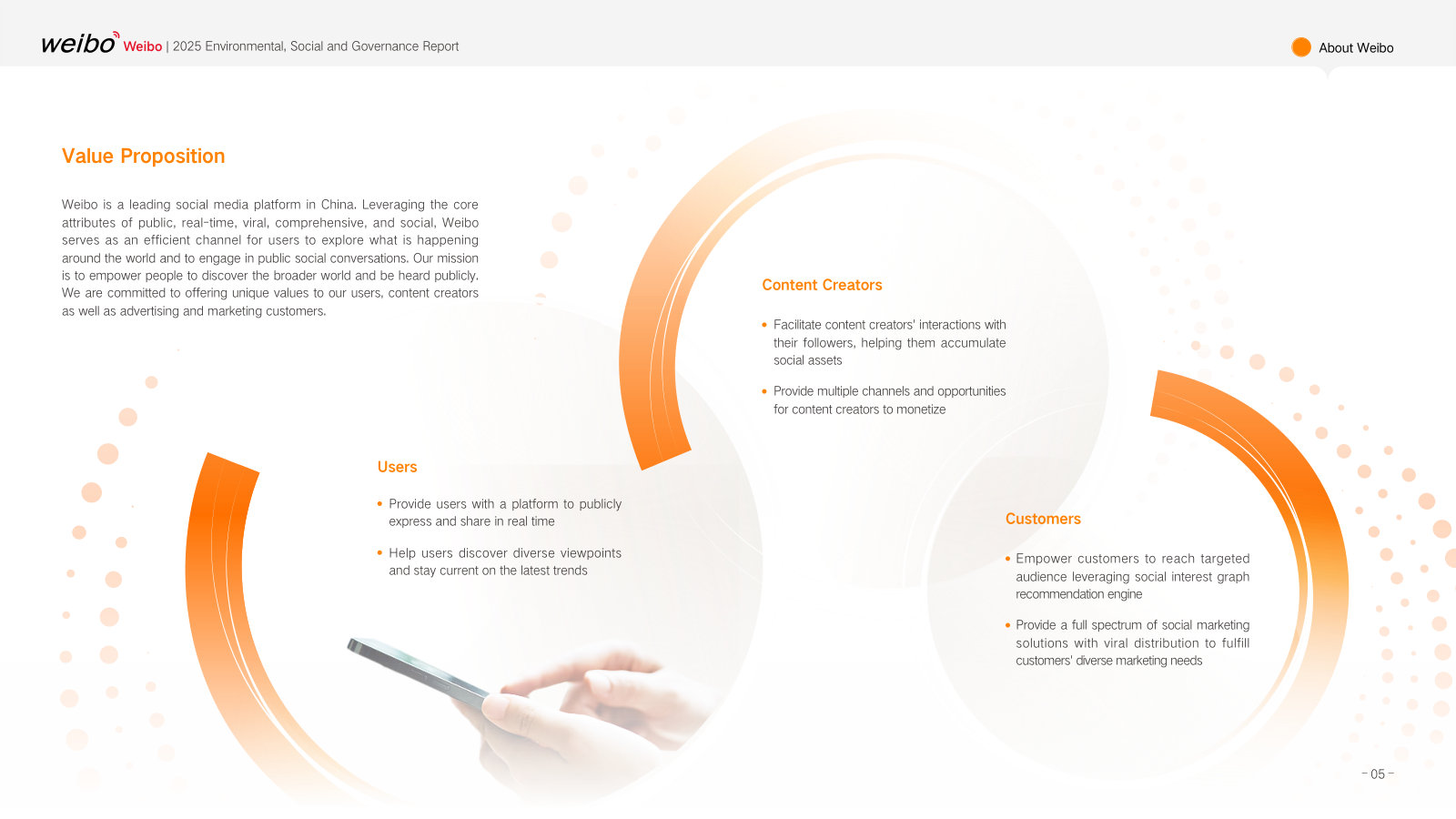
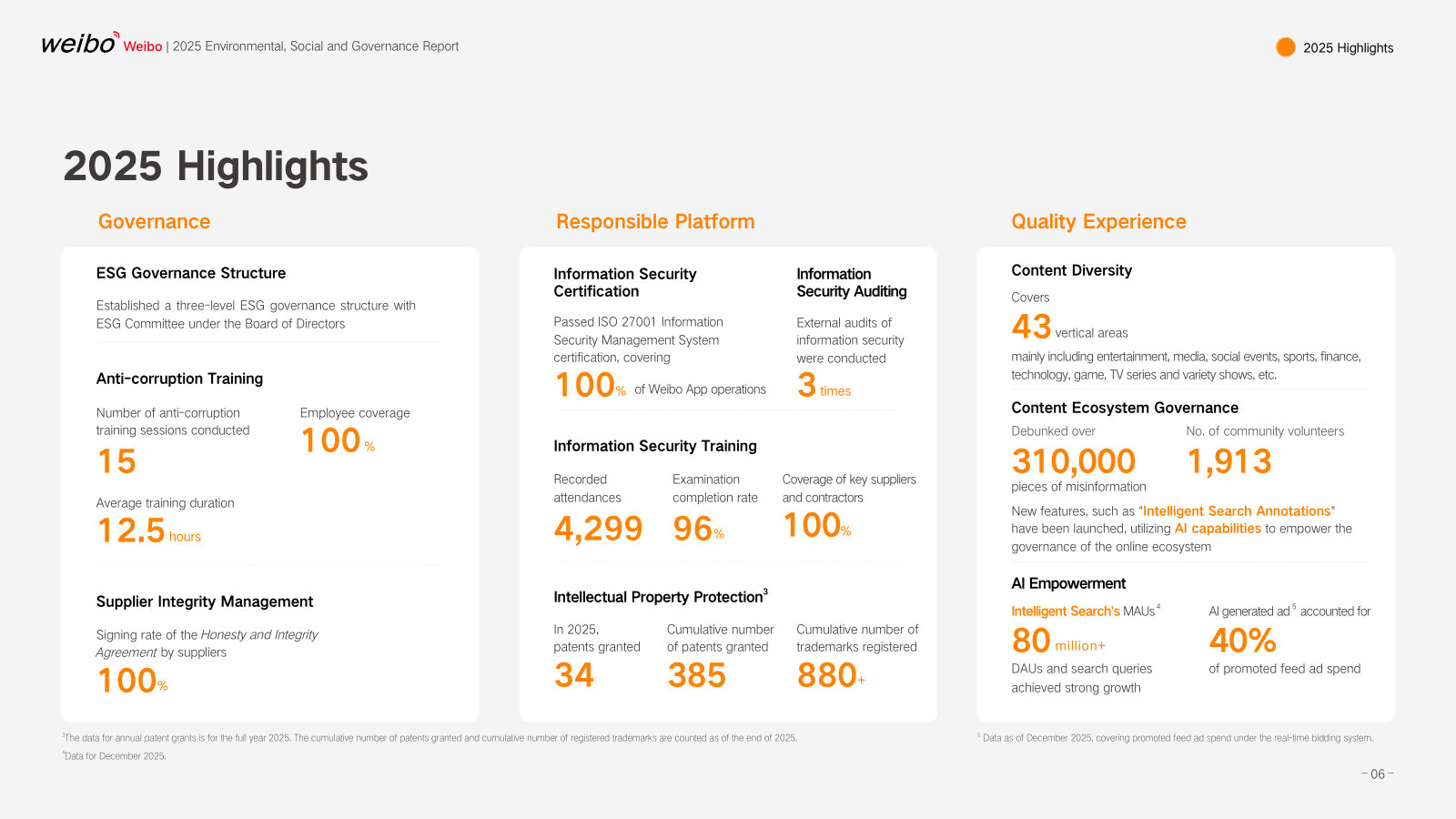
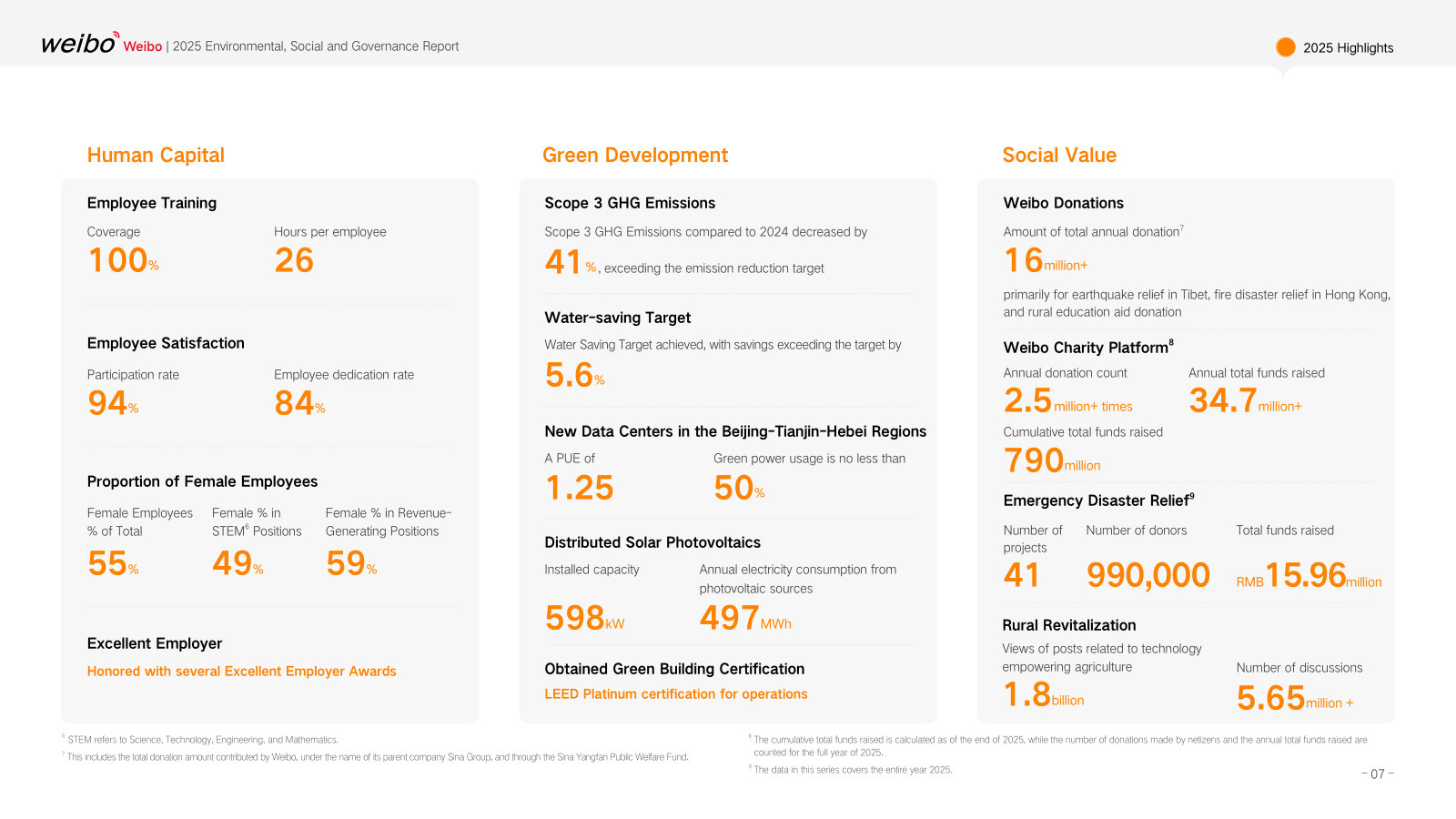
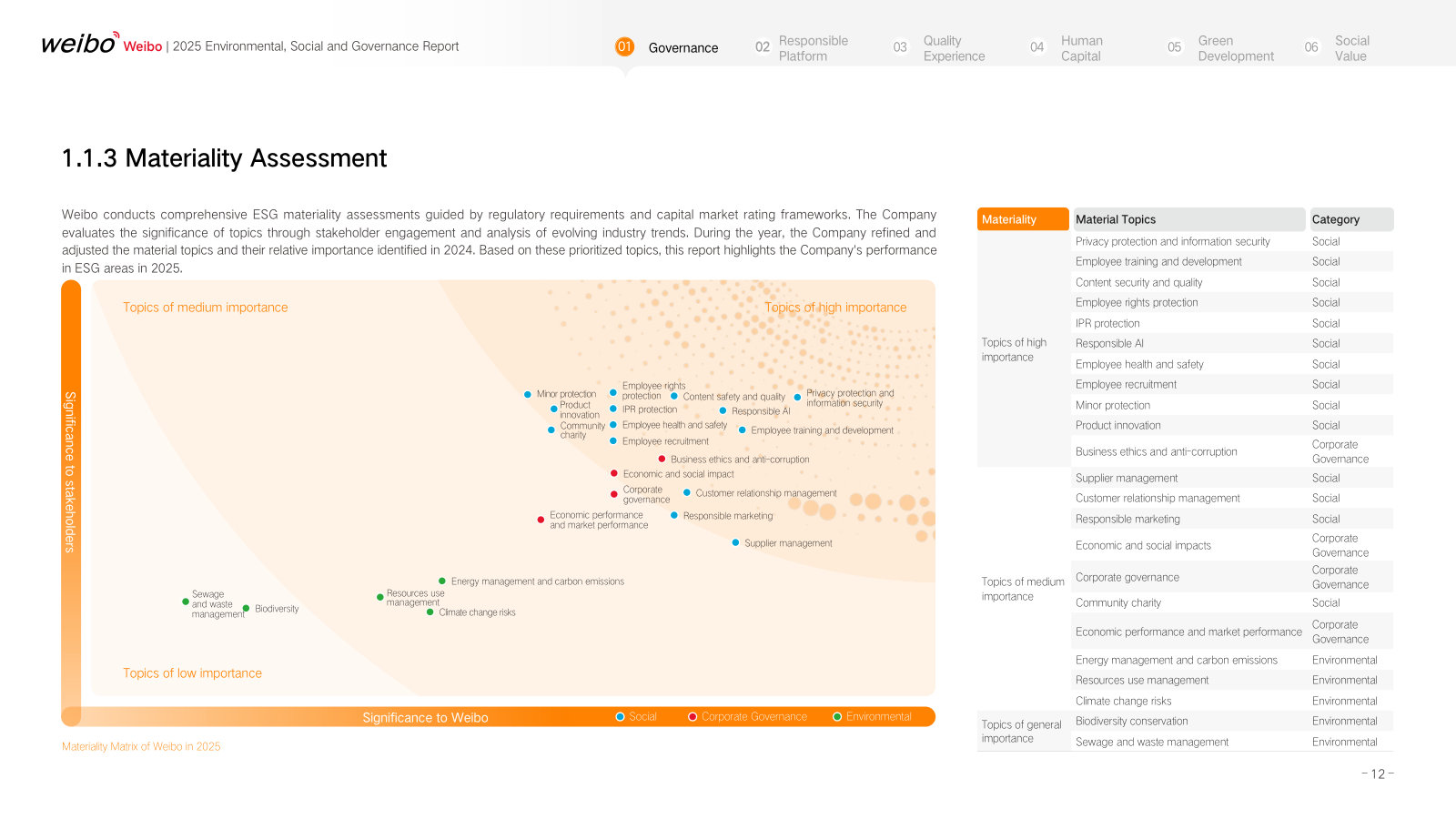
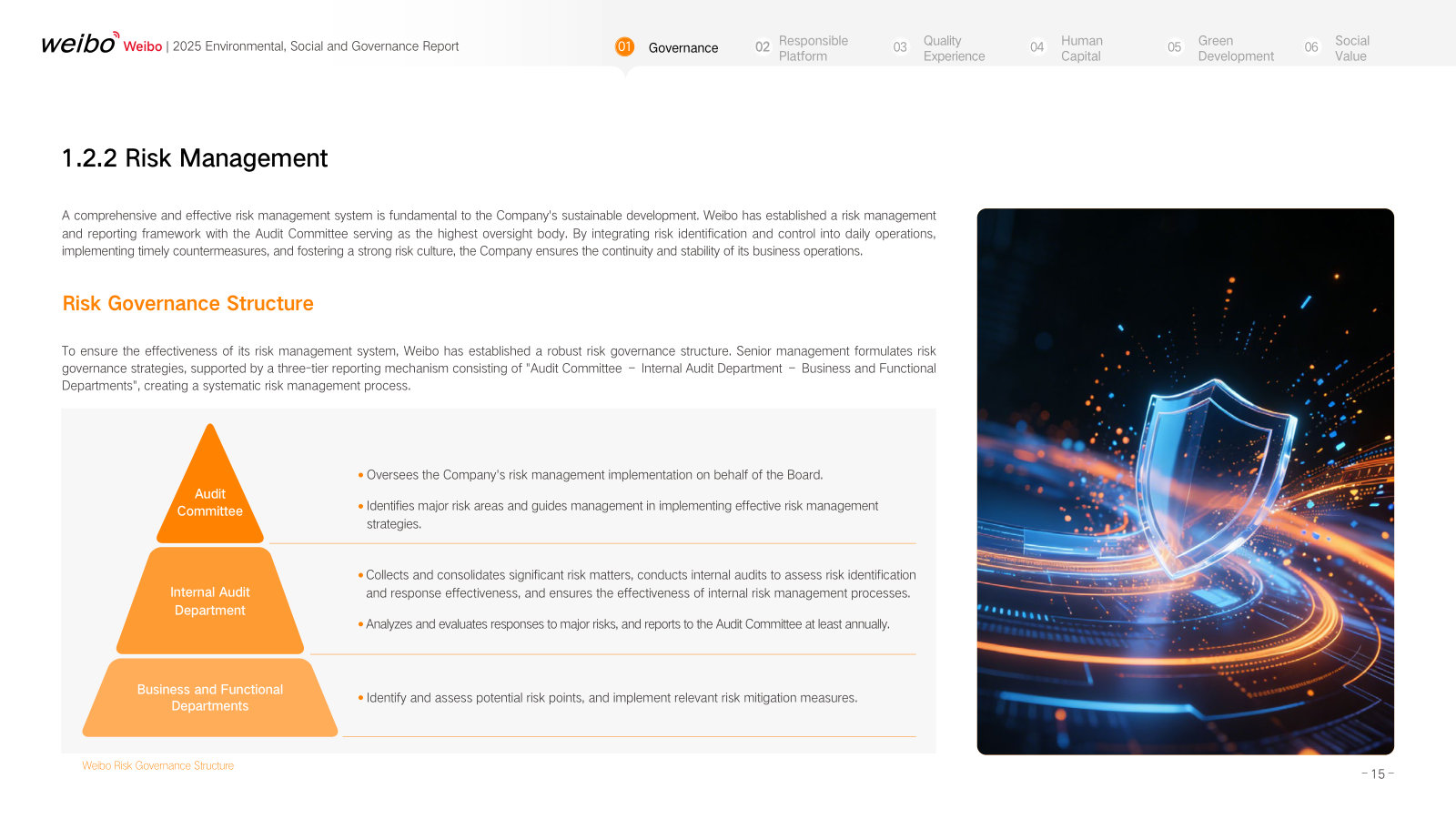
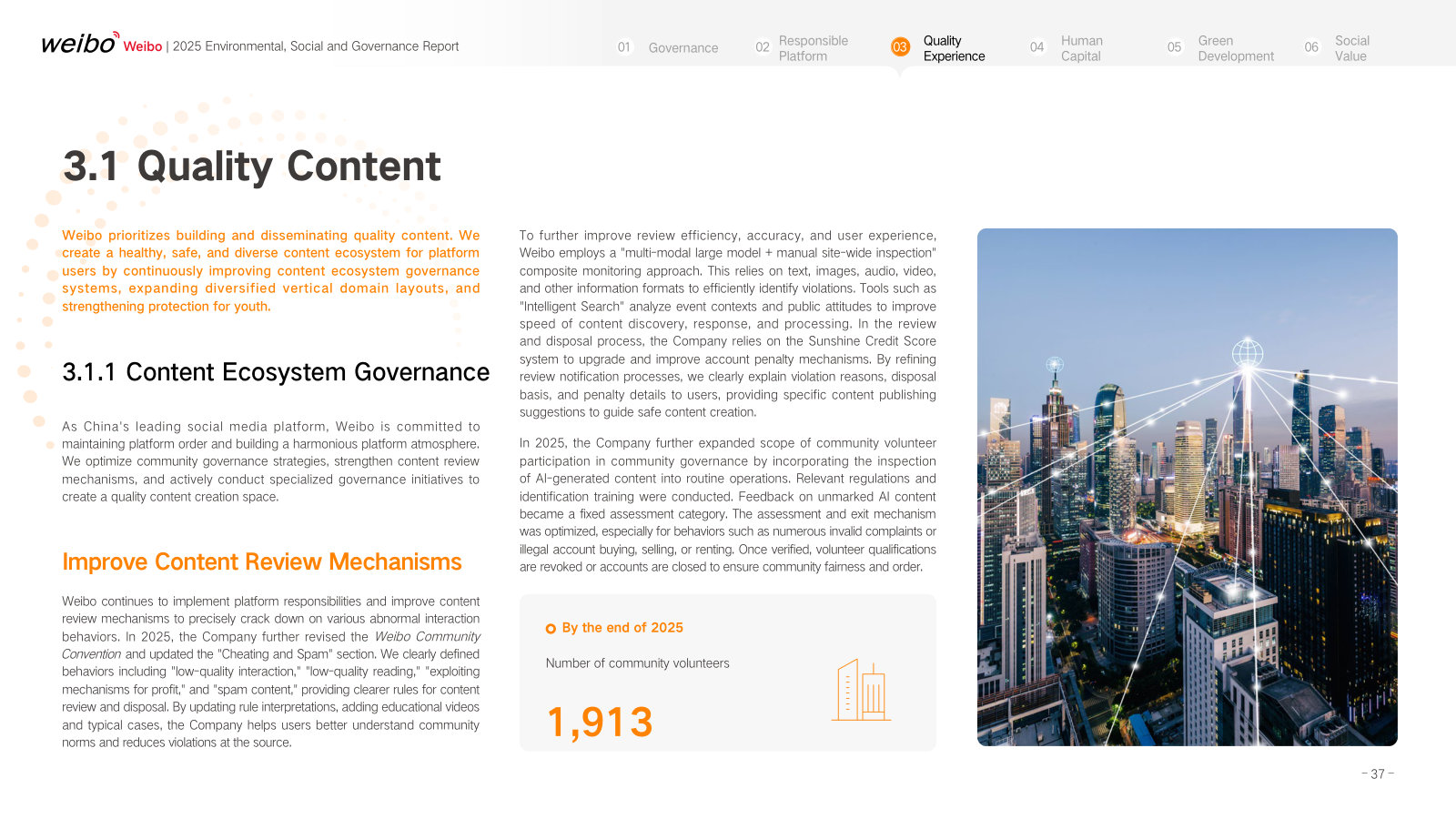
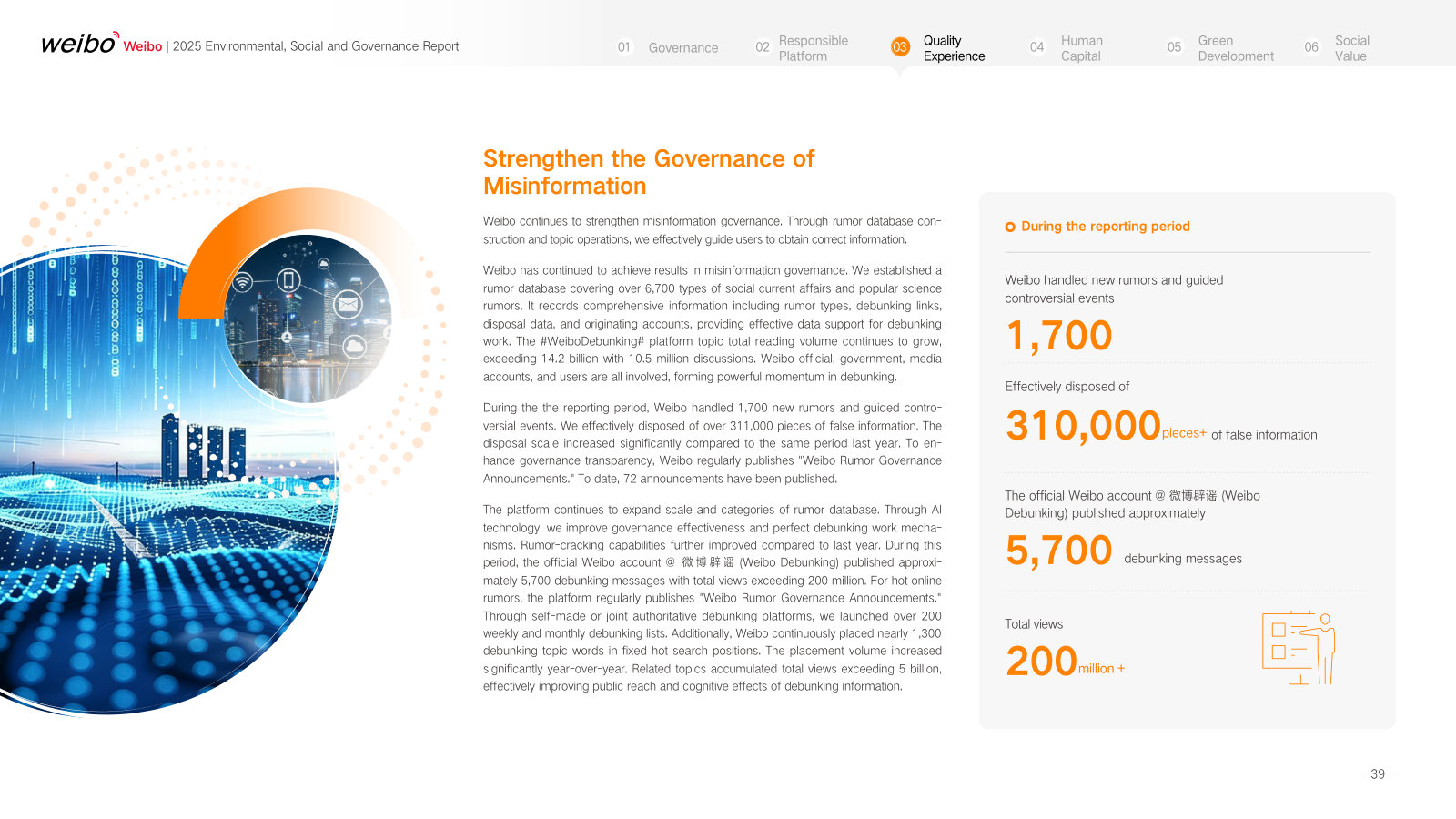
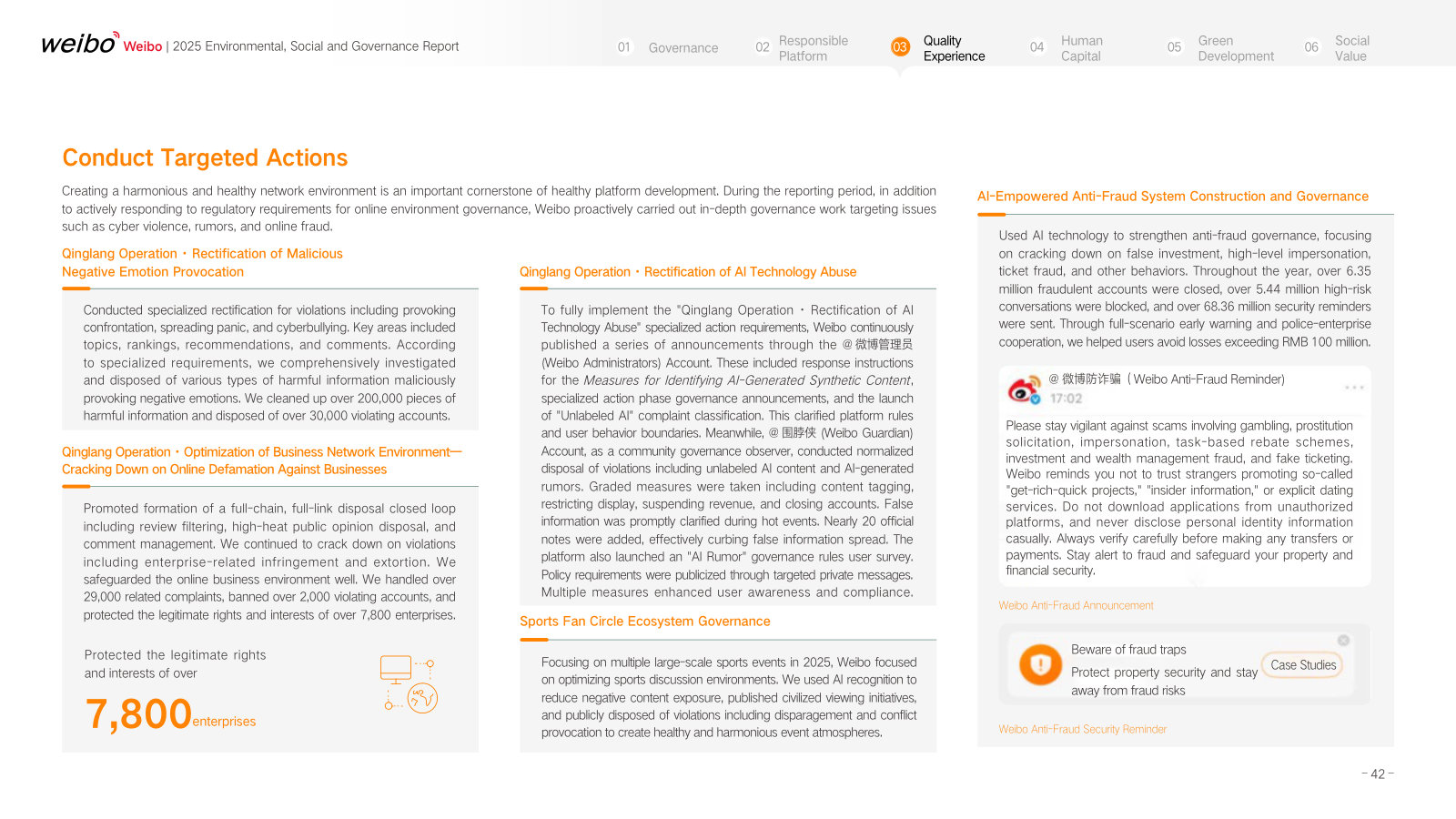
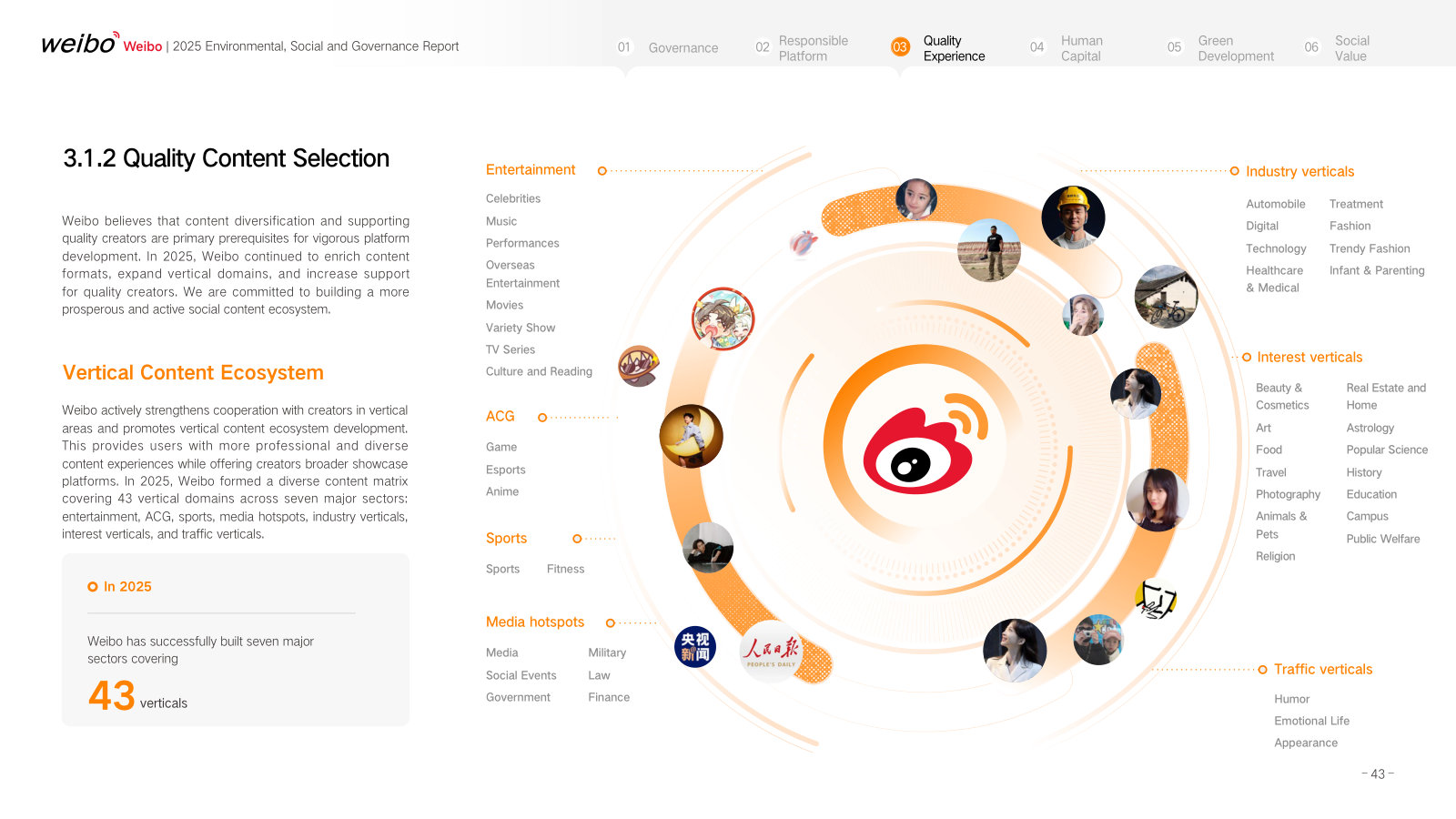
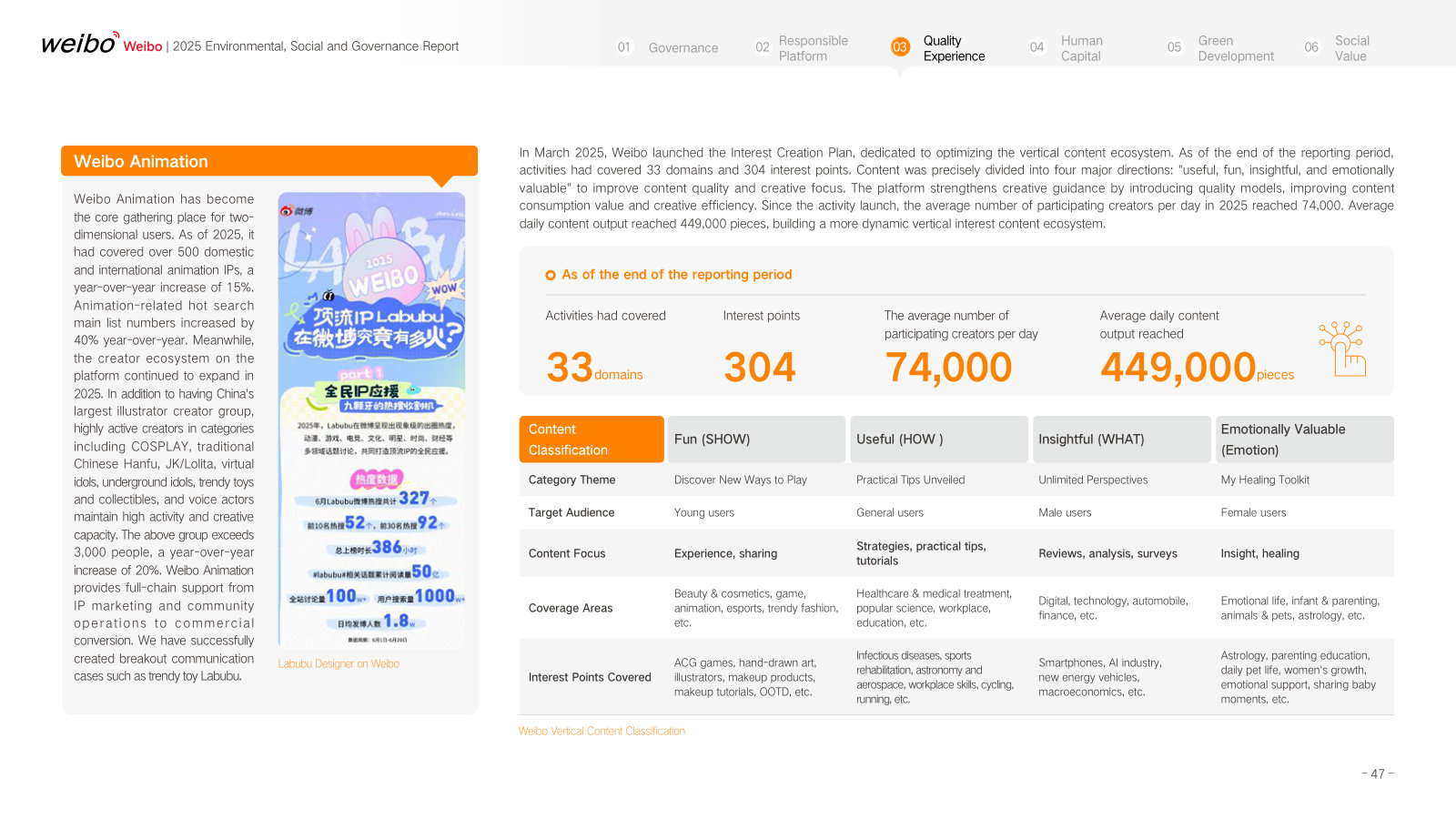
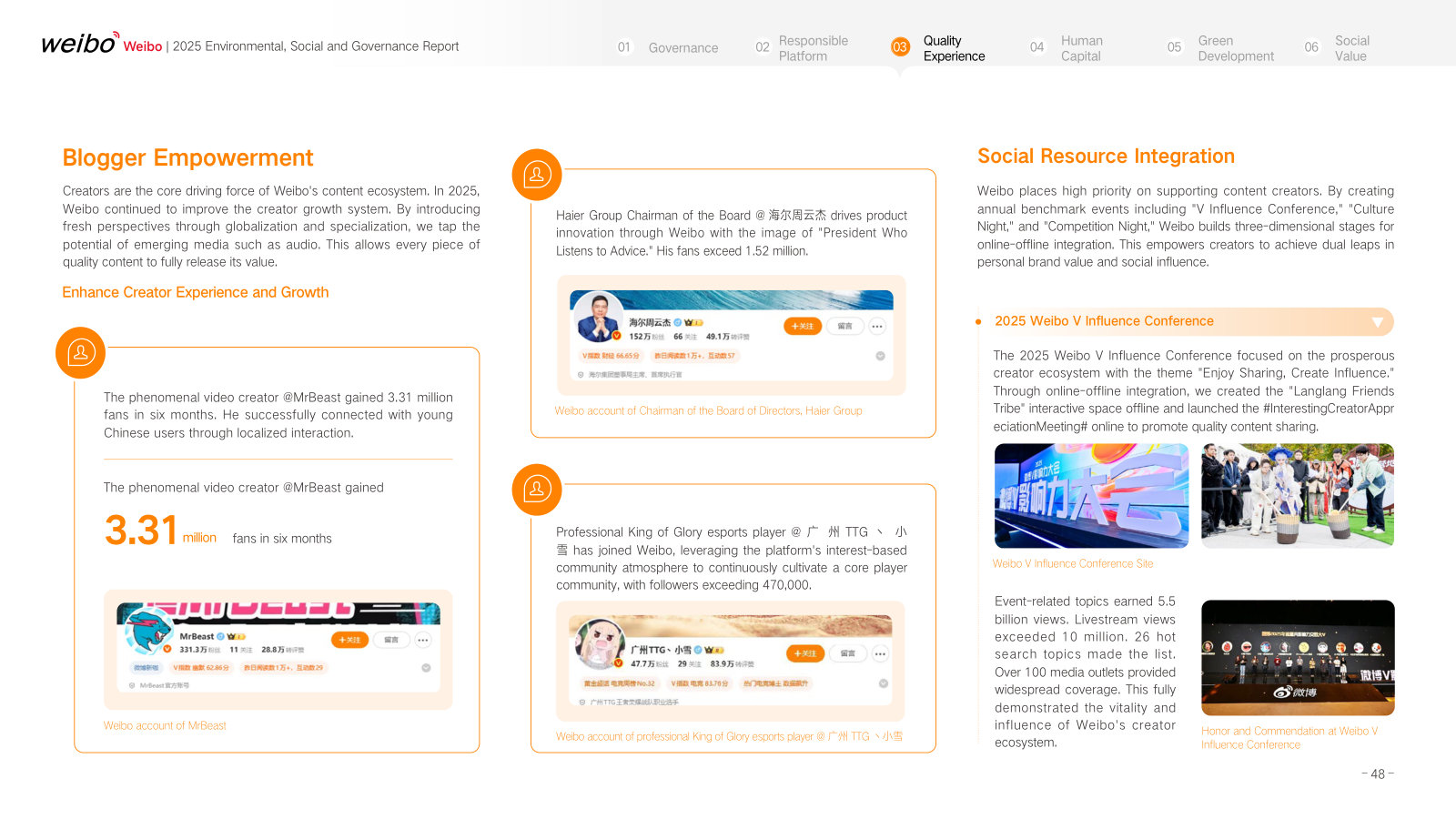
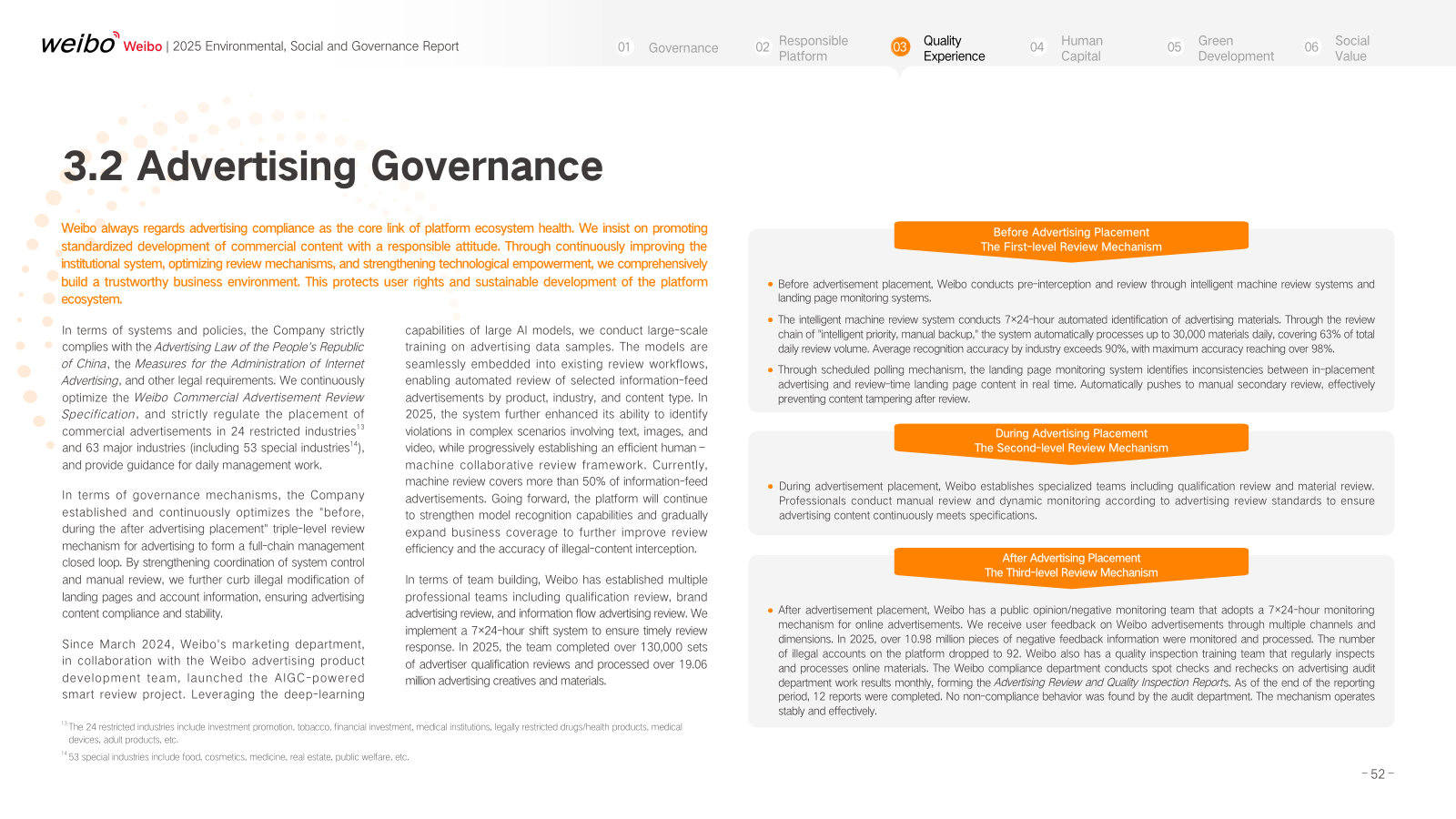
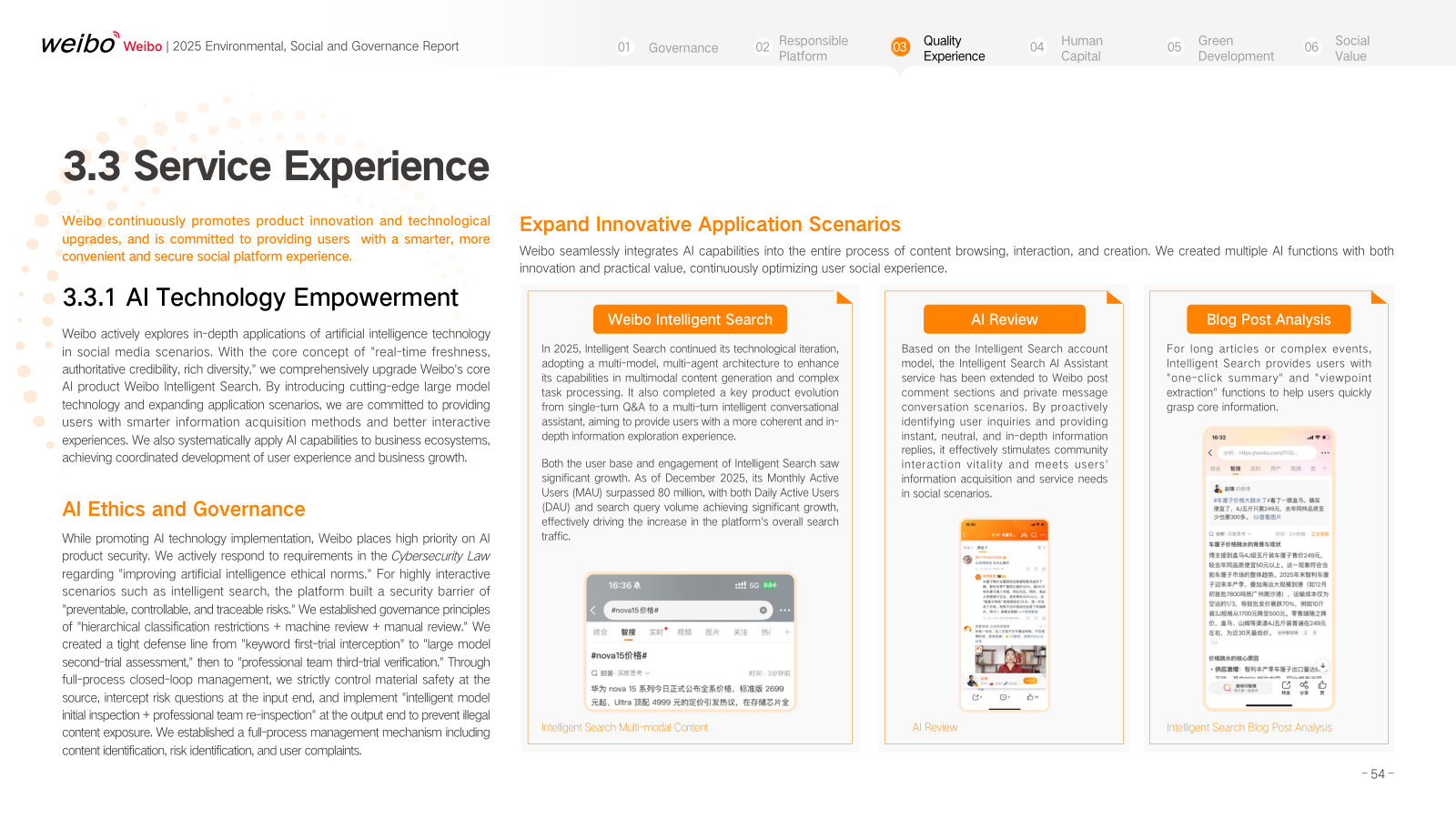
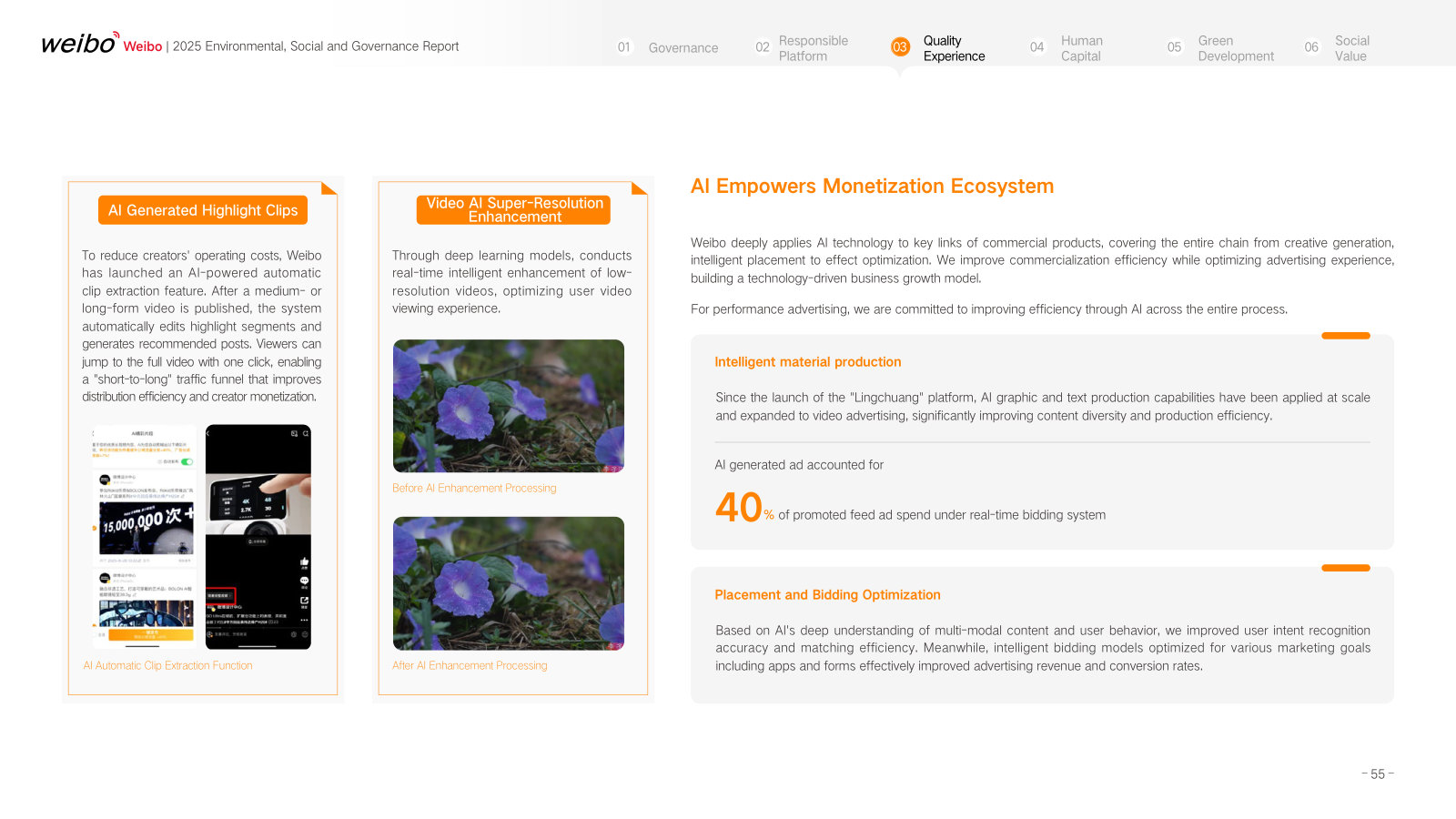
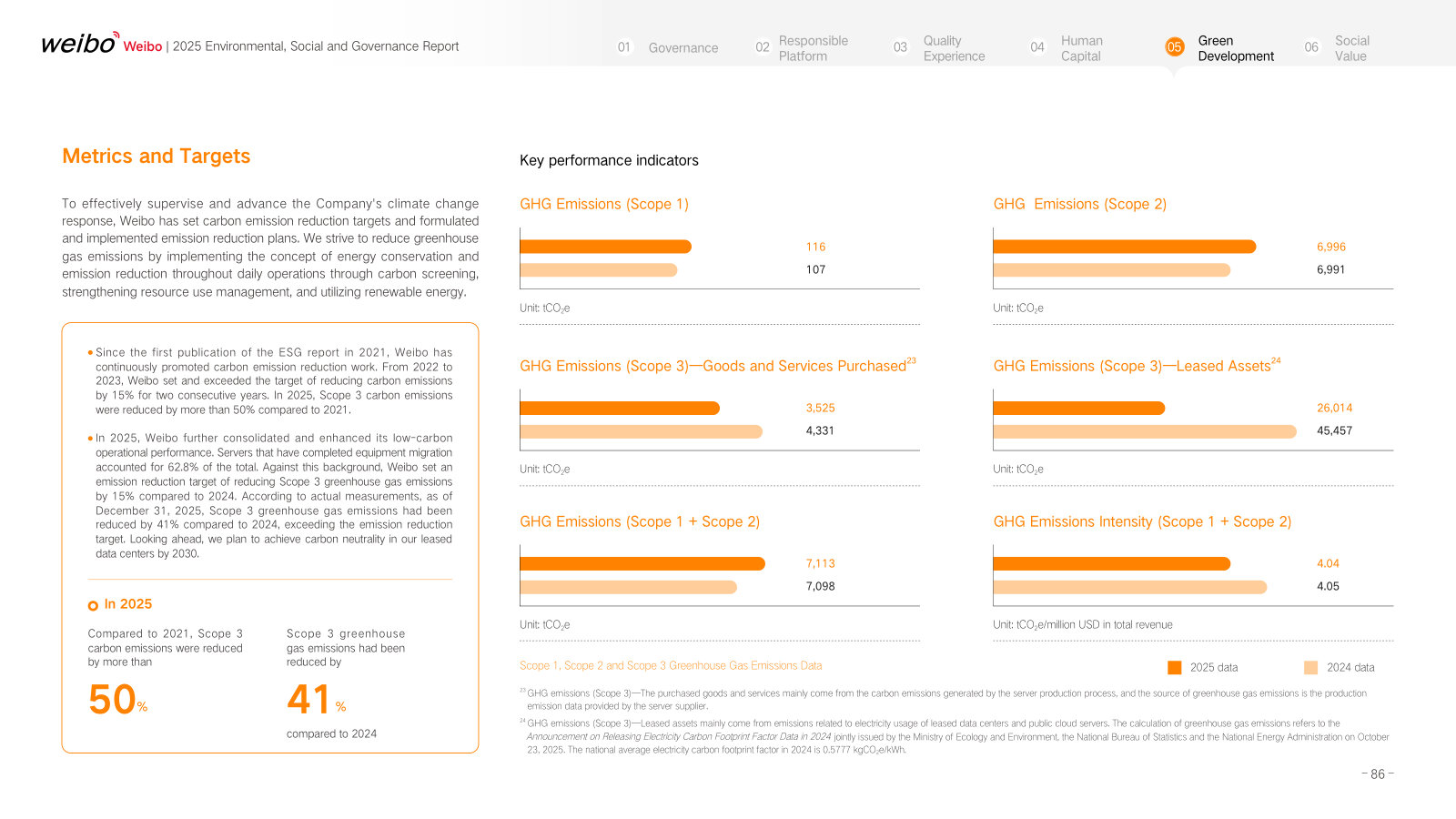
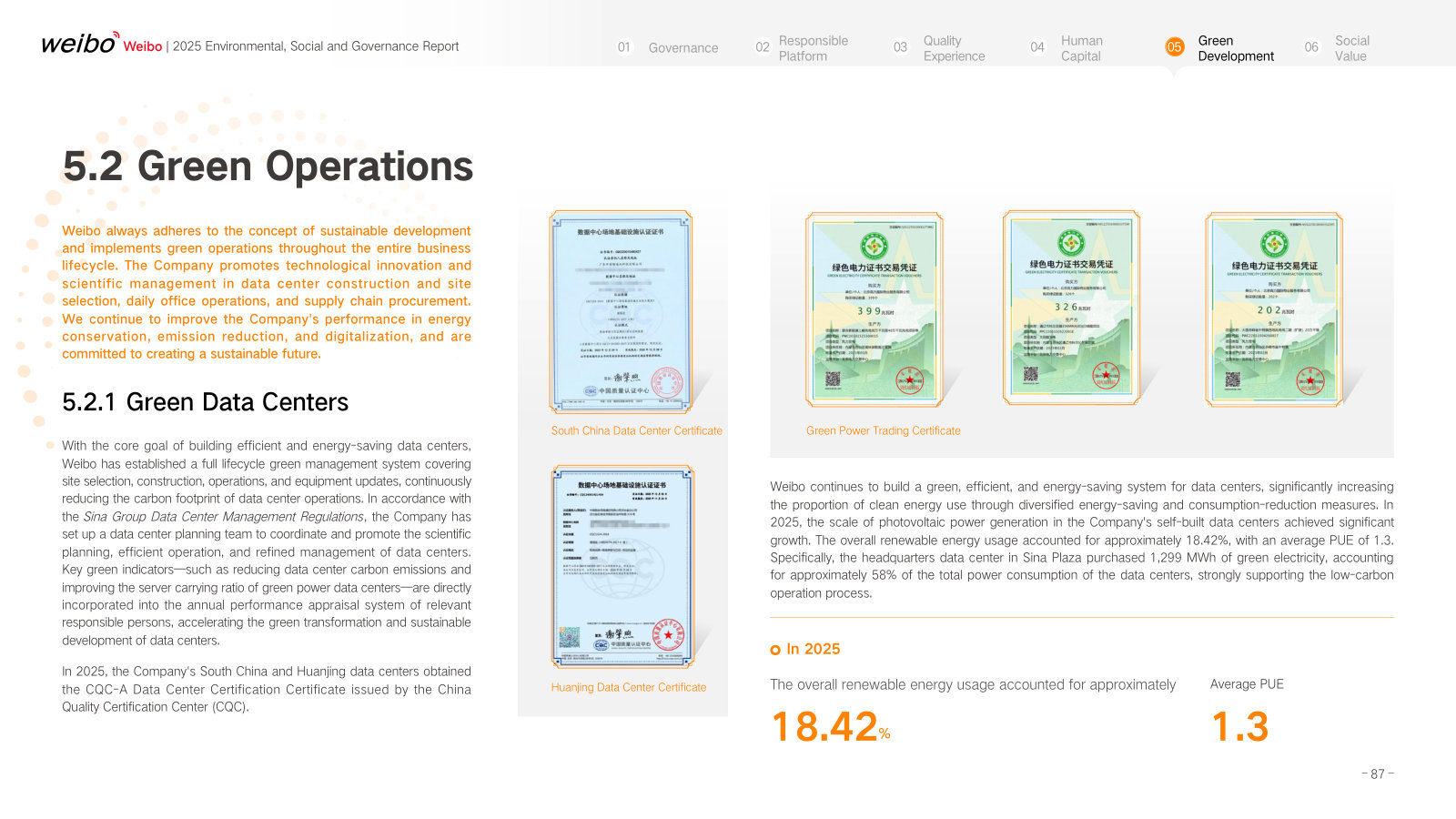
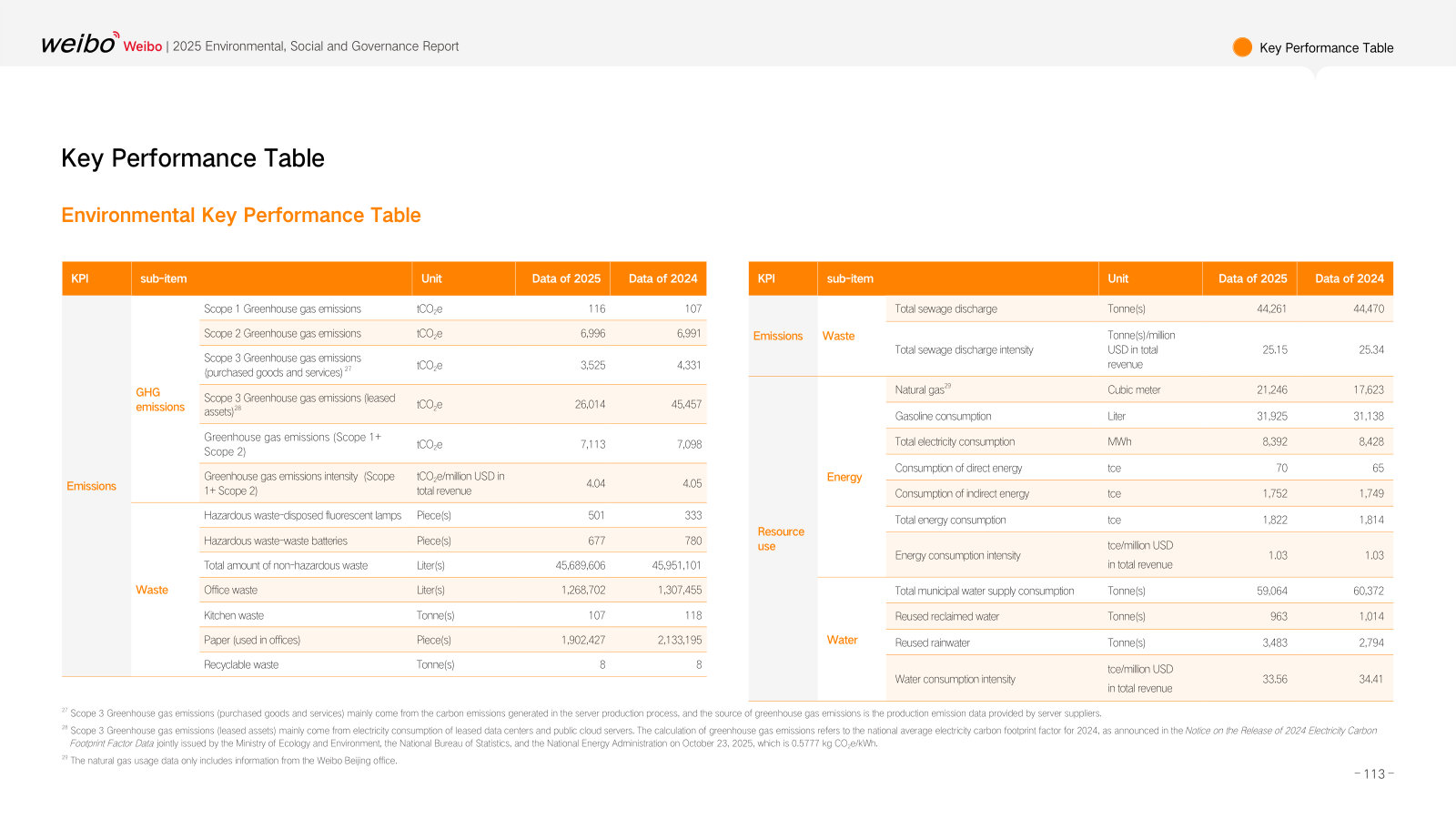
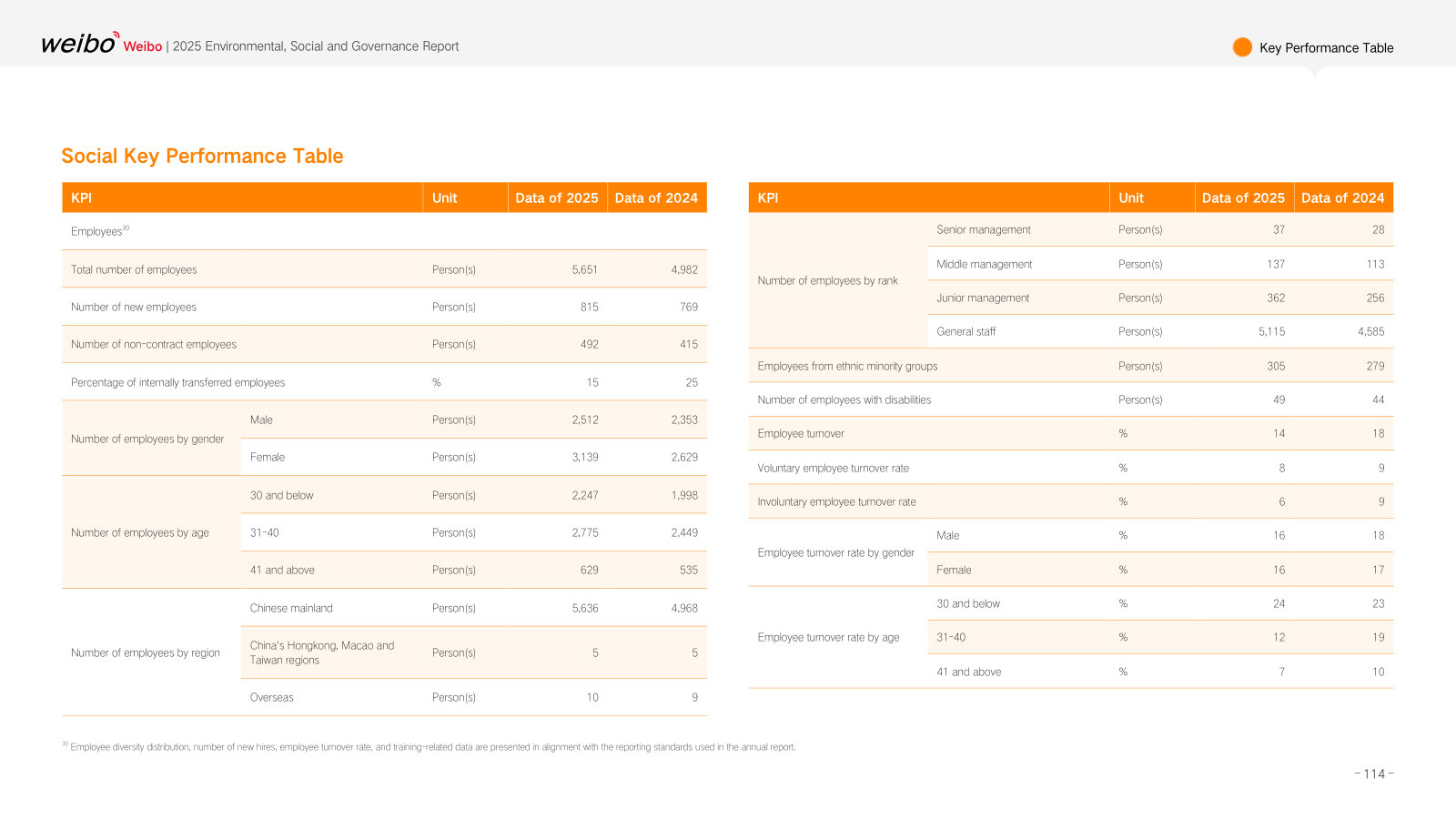
p. 5 — The company in one page: 567M MAUs, 252M average DAUs, $1,757M revenue and a 30% adjusted operating margin. · Open the full presentation →p. 6 — The three constituencies Weibo sits between — users, content creators and marketing customers — and what each is promised. · Open the full presentation →p. 7 — The year's operating scorecard, including Intelligent Search at 80M+ DAUs and AI-generated creative at 40% of promoted feed ad spend. · Open the full presentation →p. 8 — The rest of the scorecard: headcount and diversity, Scope 3 emissions down 41%, data-center PUE of 1.25, charity funds raised. · Open the full presentation →p. 13 — Management's materiality matrix — content security, privacy and responsible AI rank highest; climate risk sits at the bottom. · Open the full presentation →p. 16 — Board composition: seven directors, three independent, one woman, average tenure 8.43 years, with Charles Chao as chairman. · Open the full presentation →p. 38 — How content review works — multi-modal models plus manual site-wide inspection, the Sunshine Credit score, 1,913 community volunteers. · Open the full presentation →p. 40 — The scale of misinformation governance: 310,000 pieces of false information disposed of and a rumor database of 6,700 types. · Open the full presentation →p. 43 — The regulator's fingerprints — Qinglang campaigns on defamation, AI abuse and fan circles, plus 6.35M fraudulent accounts closed. · Open the full presentation →p. 44 — The content map: 43 verticals across seven sectors, which is the supply side of everything Weibo sells to advertisers. · Open the full presentation →p. 48 — How verticals are engineered — four content directions by target audience, with 74,000 daily participating creators. · Open the full presentation →p. 49 — The creator side of the flywheel: recruiting and retaining the gold-V and orange-V accounts that produce the content. · Open the full presentation →p. 53 — The advertising review machine — three checkpoints, 30,000 material reviews a day, 19.06M creatives processed in the year. · Open the full presentation →p. 55 — Weibo Intelligent Search, the company's main AI product bet, and the governance rules it operates under. · Open the full presentation →p. 56 — Where AI meets money: automated creative production and bidding optimization behind that 40% share of promoted feed spend. · Open the full presentation →p. 87 — Emissions and targets, with Scope 3 down 41% year on year and carbon neutrality in leased data centers promised by 2030. · Open the full presentation →p. 88 — The physical footprint behind the platform — data centers at 1.3 average PUE and 18.42% renewable energy use. · Open the full presentation →p. 114 — Two years of environmental data — emissions, energy, water — on one page, including intensity per million dollars of revenue. · Open the full presentation →p. 115 — Two years of workforce data: headcount up from 4,982 to 5,651, turnover down to 14%, 55% of employees female. · Open the full presentation →
Environmental, Social and Governance Report 2024 — FY2024 · 110 pages · Same structure a year earlier: the FY2024 user, revenue and emissions baseline against which the 2025 report is written. · Open →
Environmental, Social and Governance Report 2023 — FY2023 · 114 pages · The FY2023 edition, with a misinformation-governance timeline and vertical-by-vertical detail the later reports dropped. · Open →